
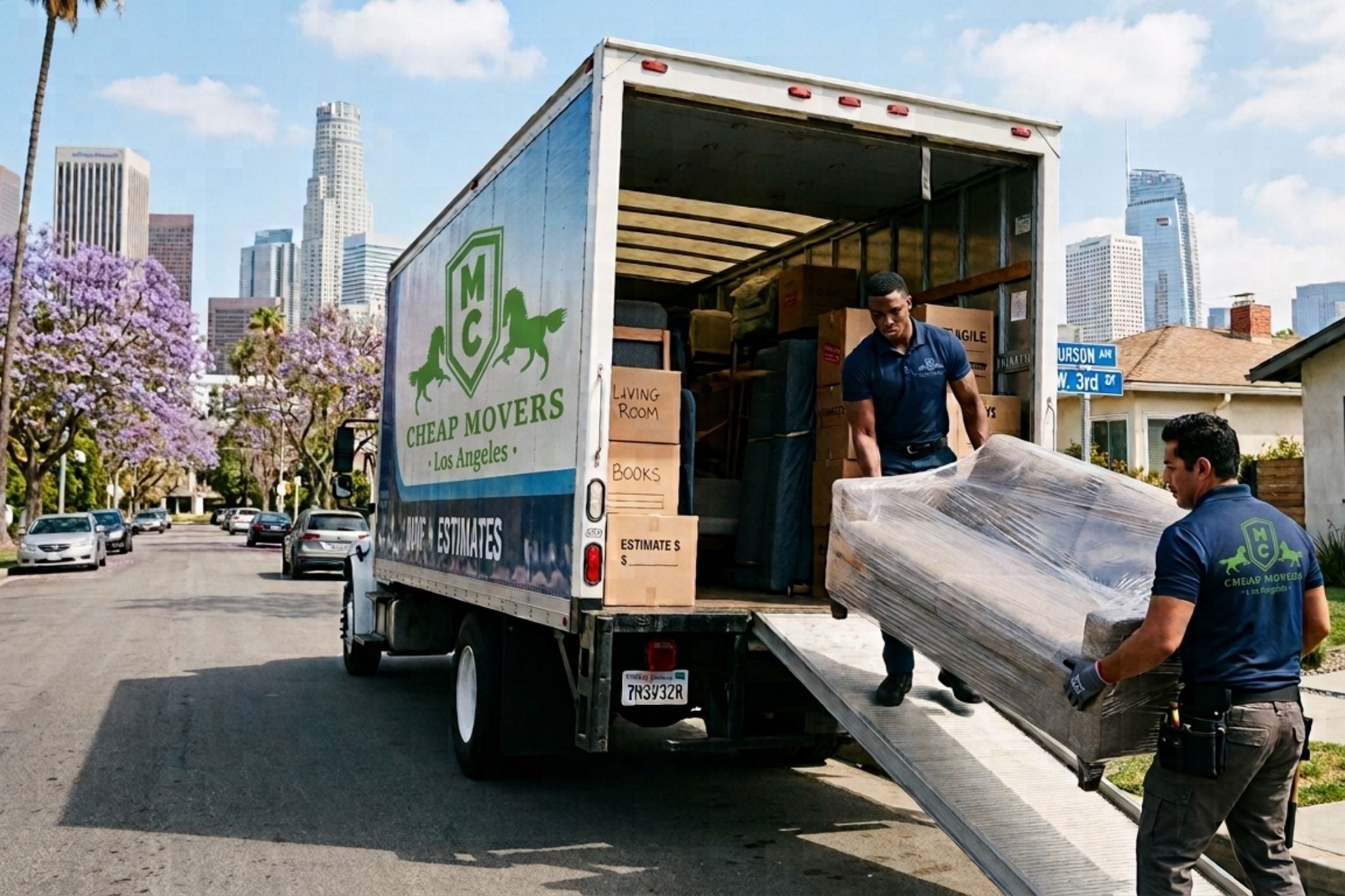
How Much Do Movers Cost in Los Angeles in 2026?
How Much Do Movers Cost in Los Angeles in 2026? Trying to budget for a move in LA without knowing what drives the cost is like trying to plan a road trip without knowing gas prices — you can guess, but you’ll probably be off. The good news: moving costs aren’t random. They follow a predictable set of variables, and once you know them, you can plan (and shop) with confidence.
How Much Do Movers Cost in Los Angeles in 2026?
Cheap Movers LA put this guide together to walk you through exactly what to check before you book, so you’re comparing quotes apples-to-apples instead of guessing which company is actually the better deal.
Step 1: Know What Size Move You’re Working With
Your home size sets the baseline for everything else — crew size, truck size, and time on the job.
- Studio / 1-bedroom: Smallest crew, shortest job, most flexible scheduling.
- 2-3 bedroom: Mid-size crew, a half-day to full-day job depending on access.
- 4+ bedroom / house: Larger crew, likely a full day, possibly multiple trucks.
Before you request any quotes, walk through your home and make a rough inventory — furniture, large appliances, and anything requiring special handling (pianos, artwork, safes). This single step is the biggest factor in getting an accurate quote instead of a rough guess.
Step 2: Understand Local vs. Long-Distance Pricing
- Local moves (generally within LA County) are billed hourly — crew size × hours worked, plus any truck/fuel fee.
- Long-distance or interstate moves are billed by weight or cubic footage plus mileage, since the crew and truck are committed for the full trip. Always confirm your mover has a valid USDOT number for interstate jobs — it’s a legal requirement.
Step 3: Check Your Access Situation
This is the part people forget to budget for, and it’s a big one in LA specifically:
| Factor | Why it matters |
|---|---|
| Walk-up units / no elevator | Adds labor time carrying items up/down stairs |
| Elevator move-in reservations | Wait time if not scheduled in advance |
| Street parking only | May require a temporary parking permit for the truck |
| Long carry distance | Extra time between the truck and your door |
| Narrow streets / dense neighborhoods | Can slow truck positioning and loading |
If any of these apply to you, mention them when you request a quote — surprises on move day are what turn an affordable move into an expensive one.
Step 4: Time Your Move Strategically
Demand in LA follows a predictable pattern:
- Busiest (priciest): Summer months, weekends, and the first/last few days of the month.
- Slower (often cheaper): Weekday moves mid-month, outside of summer.
If your lease dates are flexible at all, shifting even a few days can open up better rates and availability.
Step 5: Separate “Base Move” Costs from Add-Ons
A quote should clearly break out:
- Base labor/hourly rate or weight-based rate
- Truck and fuel fees
- Packing/unpacking service (if requested)
- Furniture disassembly/reassembly
- Specialty crating for fragile or oversized items
- Storage (short- or long-term)
- Valuation/insurance coverage level
If a “cheap” quote leaves these out and adds them later, it usually isn’t cheap by the end.
Step 6: Compare Quotes the Right Way
When comparing movers, don’t just compare the number at the bottom. Compare:
- What’s included in the base rate
- Whether there’s a minimum hour requirement
- Crew size (a lower rate with a smaller, slower crew can cost more overall)
- Cancellation/rescheduling policy
- Coverage/insurance terms
Get a Straightforward, No-Surprises Quote
Budgeting for a move shouldn’t require a spreadsheet and a law degree. Cheap Movers LA provides clear, itemized, free quotes so you know exactly what you’re paying for before move day — not after.
Request your free Cheap Movers LA quote.